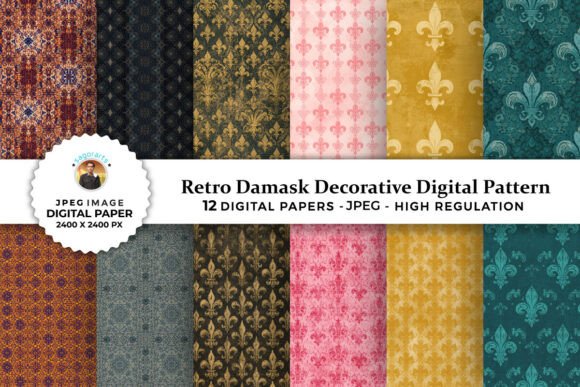
Retro Damask Decorative Digital Patterns
If you have ever scrolled through a craft supply store or browsed online marketplaces for digital assets, you have likely encountered the term Retro Damask Decorative Digital Patterns. At first glance, it sounds like just another trendy aesthetic. However, beneath the vintage allure lies a specific set of design rules and technical requirements that can make or break your project. Whether you are a seasoned graphic designer, a small business owner creating custom packaging, or a hobbyist making handmade greeting cards, understanding the nuances of these patterns is crucial. The difference between a professional-looking output and a blurry, amateurish result often comes down to file quality, resolution, and proper application.
The appeal of retro damask is undeniable. It brings a sense of timeless elegance, sophistication, and warmth to any visual composition. But choosing the right asset requires more than just picking a color palette you like. Many creators fall into traps by prioritizing aesthetics over technical specifications, leading to frustration when they try to print their designs. This guide aims to help you navigate those pitfalls, ensuring that your investment in digital paper yields high-quality results every time.
Understanding the Asset: What You Are Actually Buying
When you purchase a pack described as "12 Retro Damask Decorative Digital Patterns," you are not buying physical rolls of wallpaper or fabric. You are acquiring a zip file containing 12 distinct JPEG images. While this seems straightforward, the devil is in the details. A common misunderstanding among beginners is assuming that all digital papers are created equal. In reality, the value of these assets is determined entirely by their resolution and file integrity.
A high-quality set will provide files that are High-Resolution, typically sized at 2400 x 2400 pixels. Why does this matter? Because pixel dimensions dictate how large you can print the image before it becomes pixelated or blurry. If you plan to use these patterns for standard greeting cards or social media backgrounds, 2400x2400 pixels is usually sufficient. However, if you intend to scale them up for larger formats like tumbler wraps, scrapbook pages, or even wall art, you need to ensure the resolution holds up under scrutiny.
Many sellers offer lower-resolution versions (such as 72 DPI web-only images) at a cheaper price point. While these might look fine on a screen, they will fail miserably in print. Always verify that the product description explicitly states "High-Resolution" and confirms the pixel dimensions. Do not assume that a smaller file size equates to better performance; in digital graphics, larger files generally mean higher detail retention.
Common Mistakes in Selection and Usage
Even with the best intentions, errors occur during the selection and application phases. Here are some frequent missteps that can compromise your final product.
- Ignoring Print Resolution: The most critical error is downloading an image without checking its DPI (Dots Per Inch). For professional printing, you generally need 300 DPI. A 2400x2400 pixel image printed at 300 DPI results in an 8x8 inch square. If you need a larger print, such as a full-page scrapbook layout, you must ensure the source file has enough pixels to support that size without interpolation, which degrades quality.
- Overlooking Color Profiles: Screens use RGB color models, while printers use CMYK. While many modern digital papers are sold in RGB for versatility, converting them incorrectly can lead to dull or shifted colors in the final print. If you are sending files to a professional printer, ask if they require CMYK conversion or if they handle it themselves. Using an uncalibrated monitor can also trick you into thinking your colors are vibrant when they will appear washed out in print.
- Neglecting File Organization: Receiving a zip file with 12 unnamed JPEGs can be chaotic. If you do not rename and organize these files immediately after download, you may end up using the wrong pattern for a specific project. For instance, using a dark, heavy damask pattern for a light, airy wedding invitation might create a visual clash that undermines the theme.
- Assuming Seamless Tiling: Not all decorative patterns are designed to tile seamlessly. If you are wrapping a cylindrical object like a tumbler, you need a pattern that repeats flawlessly. Check the product description or preview images to see if the pattern is marked as "seamless." If it is not, you will face difficult alignment issues when trying to wrap curved surfaces.
Practical Applications and Better Approaches
Once you have secured a high-quality set of 12 Retro Damask Decorative Digital Patterns, knowing how to apply them effectively is key. These assets are incredibly versatile, but they require thoughtful integration to avoid looking cluttered or dated.
Gift Wrapping and Packaging
One of the most popular uses for these digital papers is custom gift wrapping. Instead of buying expensive branded paper, you can print these patterns on high-quality cardstock or tissue paper. To avoid the mistake of overwhelming the recipient, use the damask pattern as a background and pair it with ample white space or solid-colored accents. This creates a balanced look where the intricate details of the damask stand out rather than competing with other elements.
Greeting Cards and Invitations
For invitations, particularly for weddings, anniversaries, or formal events, retro damask adds a layer of sophistication. However, readability is paramount. A common error is placing text directly over the busiest part of the pattern. To correct this, either place text boxes on solid-colored overlays or choose a lighter area of the damask design. Ensure your font contrasts well with the background. Dark text on a light damask background works best for legibility.
Tumbler Wraps and Scrapbooking
When creating sublimation wraps for tumblers, precision is everything. Ensure your digital pattern matches the exact dimensions of your blank tumbler. Scaling an image incorrectly can stretch the damask motifs, making them look distorted and unprofessional. Always print a test strip on regular paper first to check the alignment and color accuracy before committing to your final material.
Digital Backgrounds and Social Media
For bloggers, marketers, and content creators, these patterns serve as excellent backdrops for blog headers, YouTube thumbnails, or Instagram posts. The 2400x2400 pixel size is perfect for square social media formats. To keep the design modern despite the retro pattern, overlay clean, sans-serif typography or minimalist icons. This juxtaposition of old and new keeps the design relevant and engaging for contemporary audiences.
Evaluating Your Choice Before Downloading
Before clicking "buy," take a moment to evaluate the provider and the product. Look for previews that show the pattern at different scales. Can you see the texture and detail clearly? If the preview looks muddy or indistinct, the actual file likely suffers from compression artifacts. Additionally, read reviews specifically mentioning print quality. Other users’ experiences with color fidelity and sharpness are invaluable indicators of what you can expect.
Furthermore, consider the licensing terms. Some digital patterns are for personal use only, while others allow commercial application. If you plan to sell products made with these patterns, such as printed mugs or wrapped gifts, ensure you have the appropriate commercial license. Violating these terms can lead to legal issues and financial penalties.
Final Thoughts on Quality and Satisfaction
Investing in high-quality digital assets like 12 Retro Damask Decorative Digital Patterns is a smart move for anyone serious about their creative output. By avoiding common mistakes related to resolution, color management, and organization, you ensure that your projects look polished and professional. Remember, the pattern itself is only half the equation; your approach to integrating it into your design determines the final success. Take the time to understand the technical specifications, plan your layouts carefully, and respect the licensing agreements. With these steps, you can leverage the timeless beauty of retro damask to create stunning, memorable designs for any occasion.