3D Pale Pastel Tulip Flowers Patterns
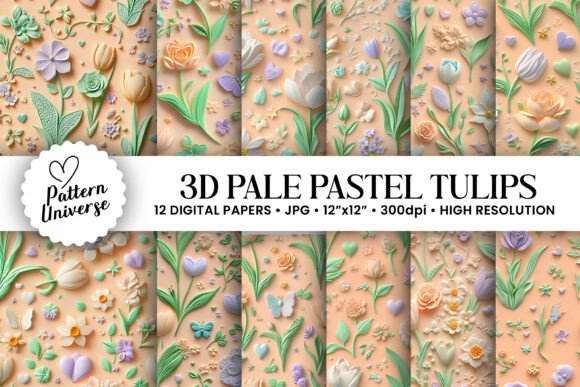
In the world of digital design, finding a pattern that balances sophistication with approachability can be a challenge. Enter 3D Pale Pastel Tulip Flowers Patterns, a collection that brings a touch of springtime elegance to any project. Whether you are a scrapbooker looking for the perfect background or a small business owner creating branded packaging, these seamless designs offer a versatile solution. The aesthetic is defined by soft, muted hues and realistic depth, creating visuals that feel both modern and timeless.
This specific digital asset pack is designed for creators who value quality and convenience. It includes 12 unique digital papers within a single zip file, all rendered in high-resolution 300dpi. Each file measures 3600 x 3600 pixels (12″ x 12″), ensuring crisp output whether you are printing on standard paper or scaling up for larger formats. Thanks for stopping by and exploring how these patterns can elevate your creative workflow.
The Aesthetic Appeal of Pale Pastels and 3D Depth
Why do pale pastel tulips resonate so strongly with designers? The answer lies in color psychology and visual texture. Pastel tones—soft pinks, mint greens, lavender, and creamy whites—are associated with calmness, freshness, and optimism. They are non-intrusive, making them ideal backgrounds that allow other elements, such as text or product images, to stand out without competition.
The "3D" aspect of this pattern set adds a layer of realism often missing from flat vector graphics. By incorporating subtle shadows, highlights, and perspective, the tulips appear to pop off the page. This photorealistic quality enhances the perceived value of the final product. For instance, when used on gift wrapping, the tactile illusion of depth makes the package feel more luxurious and thoughtfully curated. In digital contexts, such as website headers or social media banners, this depth creates a focal point that draws the eye naturally.
Key Characteristics and Technical Specifications
Before integrating these patterns into your projects, it is essential to understand their technical strengths. The high resolution is not just a marketing claim; it is a functional requirement for professional work. At 300dpi, the files meet industry standards for commercial printing. This means you can zoom in to inspect individual petals without seeing pixelation or blurriness.
- Seamless Tiling: The patterns are designed to repeat seamlessly. This is crucial for applications like tumbler wraps or continuous web backgrounds where visible seams would break the immersion.
- Standardized Dimensions: The 12″ x 12″ size is the industry standard for scrapbooking and many craft software programs. It ensures compatibility with popular cutting machines and layout tools.
- Variety Within Unity: While all 12 papers share the same theme, they likely vary in density, orientation, or specific color accents. This variety allows for mixing and matching within a single project to create dynamic layouts.
Practical Applications Across Industries
The versatility of 3D Pale Pastel Tulip Flowers Patterns extends far beyond simple decoration. Here is how different professionals can leverage these assets:
Crafting and Personal Projects
For hobbyists, these digital papers are a goldmine. Junk journal enthusiasts can use them as textured backgrounds for collages, pairing them with dried flower ephemera or vintage typography. Scrapbookers can print them at home or through a service to document life events with a cohesive, elegant theme. Furthermore, they are perfect for creating custom greeting cards. The soft floral motif works beautifully for birthdays, thank-you notes, or spring-themed invitations, conveying warmth and sincerity.
Small Business and Branding
Entrepreneurs in the beauty, wellness, and lifestyle sectors often seek branding that feels organic and gentle. These patterns provide an instant brand identity. Imagine a skincare company using the pale pastel tulip design on their product labels or box inserts. The association with natural flowers reinforces the idea of botanical ingredients and gentle care. Similarly, boutique owners can use these designs for tissue paper, hang tags, or shopping bags, enhancing the unboxing experience which is critical for customer retention.
Event Planning and Stationery
Weddings, baby showers, and bridal showers frequently revolve around floral themes. Using these 3D patterns for invitation suites, place cards, or menu designs ensures a consistent look. Because the colors are pale, they pair easily with metallic accents like gold foil or silver ink, adding a touch of glamour. The seamless nature of the pattern also makes it suitable for large-scale applications, such as backdrop designs for photo booths or table runners.
Digital Content Creation
Bloggers and influencers can utilize these high-res images as featured post images, Pinterest pins, or YouTube thumbnails. The clean, bright aesthetic performs well on social media feeds, standing out against cluttered interfaces. Additionally, educators might find value in using these patterns for printable classroom materials, such as certificate templates or worksheet borders, adding a cheerful element to learning resources.
Benefits of Using AI-Generated Seamless Patterns
The mention of "AI Generated" in the description often raises questions about quality. However, in this context, it signifies precision and consistency. AI algorithms excel at creating seamless repeats that would take hours to manually tile in software like Photoshop. This efficiency benefits the user by providing ready-to-use assets that are mathematically perfect in their repetition.
Moreover, AI generation allows for a level of detail and lighting control that mimics professional photography. The result is a pattern that looks authentic rather than artificial. For users, this means less time spent editing and more time creating. You get a polished, professional-looking asset immediately after download.
Implementation Tips and Best Practices
To get the most out of your 3D Pale Pastel Tulip Flowers Patterns, consider the following practical advice:
- Color Matching: Since the palette is pale, ensure your accompanying text or graphic elements have sufficient contrast. Dark charcoal or deep navy text will look striking against light pink or blue tulip backgrounds, whereas white text may disappear.
- Printing Tests: Always print a small test strip before committing to a full run. Monitor settings on your printer can affect how pastels render; some printers may make colors appear slightly darker or more saturated than intended.
- Layering: Do not be afraid to layer these patterns. Use one version as a base and overlay another with lower opacity to create complex, multi-dimensional textures. This technique is particularly effective in junk journals and mixed-media art.
- File Management: Keep your zip file organized. Extract the 12 individual PNG or JPG files into a dedicated folder labeled with the date of purchase. This makes future retrieval easy when inspiration strikes for a new project.
Conclusion
Whether you are designing a heartfelt greeting card, launching a new eco-friendly product line, or simply decorating your personal planner, 3D Pale Pastel Tulip Flowers Patterns offers a reliable and aesthetically pleasing solution. The combination of high-resolution clarity, seamless functionality, and timeless floral beauty makes these digital papers a valuable addition to any creator’s toolkit. By leveraging these assets, you can enhance the visual appeal of your work, communicate a sense of calm and professionalism, and engage your audience with designs that feel both crafted and contemporary.