Red Watercolor Chrysanthemum Patterns
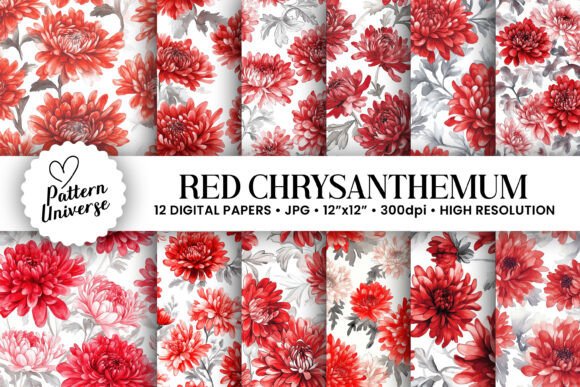
The choice of background texture often determines the emotional resonance of a design before the viewer even reads the text. In the world of digital crafting and graphic design, few motifs carry the same blend of elegance, tradition, and visual warmth as the chrysanthemum. When rendered in rich red watercolor tones, this floral subject adds depth, sophistication, and a touch of organic imperfection that flat vector graphics simply cannot replicate. For creators looking to elevate their projects, Red Watercolor Chrysanthemum Patterns offer a versatile solution that bridges the gap between traditional artistry and modern digital efficiency.
This specific collection features 12 distinct seamless patterns, each generated with high-fidelity attention to detail. These are not merely static images; they are functional assets designed to integrate seamlessly into a wide array of creative workflows. Whether you are designing a wedding invitation suite, preparing print-ready materials for a small business, or curating content for a digital junk journal, having access to high-quality, repeatable textures saves significant time while ensuring a polished final result.
The Value of Seamless Digital Papers
Understanding the utility of seamless patterns is key to appreciating why these files are valuable. A seamless pattern allows an image to tile infinitely without visible seams or breaks. This capability is crucial for several applications where space needs to be covered uniformly. For instance, when creating a tumbler wrap, the design must wrap around the cylindrical surface smoothly. If the pattern has hard edges or discontinuities, the illusion of a continuous design is broken, leading to a amateurish appearance.
Similarly, in scrapbooking and junk journaling, backgrounds need to fill entire pages or spread across multiple spreads. With these 12 digital papers, users can expand the design to any dimension required. The ability to scale without pixelation ensures that whether you are printing a small greeting card or a large wall art piece, the quality remains consistent. This flexibility supports professionals who need to adapt designs for different mediums quickly, reducing the need to create multiple variations from scratch.
High-Resolution Standards for Professional Output
In digital design, resolution is not just a technical specification; it is a promise of quality. These files are provided at a high resolution of 300 dpi, with dimensions of 3600 x 3600 pixels (equivalent to 12″ x 12″). This standard meets the requirements for most commercial printing processes, including offset and digital printing. For marketers and bloggers, this means that images used in blog headers or social media graphics will appear crisp on high-density screens, such as Retina displays or modern smartphones.
For crafters and small business owners, this resolution is particularly important for physical products. When producing items like gift wrapping paper, fabric prints, or custom packaging, low-resolution images can result in blurry or pixelated outputs. By starting with 300 dpi files, designers ensure that the delicate details of the watercolor brushstrokes and the subtle gradients of the red hues are preserved. This attention to detail enhances the perceived value of the final product, which is essential for brands aiming to communicate premium quality to their customers.
Practical Applications Across Industries
The versatility of Red Watercolor Chrysanthemum Patterns makes them suitable for a diverse range of industries and personal projects. Here is how different user groups can leverage these assets:
- Greeting Card Designers: The chrysanthemum is a symbol of longevity and joy in many cultures, making it appropriate for birthdays, anniversaries, and holidays. The red color palette adds vibrancy and passion, perfect for Valentine’s Day or festive occasions. Designers can use the seamless patterns as full-page backgrounds, allowing space for elegant typography and personal messages.
- Event Planners and Invitations: Weddings, galas, and formal dinners often require cohesive visual themes. These patterns provide a sophisticated backdrop for invitations, save-the-dates, and place cards. The organic nature of watercolor softens the formality, creating an inviting and warm atmosphere for guests.
- Small Business Owners: Entrepreneurs selling handmade goods can use these patterns for product photography backdrops, custom packaging, or website banners. Consistent branding elements help build recognition, and using high-quality textures can differentiate a brand in a crowded marketplace.
- Digital Journalers and Scrapbookers: Hobbyists who create digital layouts benefit from the ease of use. Instead of hunting for royalty-free images that may have licensing restrictions, users can download a single zip file containing 12 unique options. This variety allows for dynamic layouts where different pages feature different patterns, adding visual interest to the narrative.
- Educators and Content Creators: Teachers creating worksheets, presentations, or educational materials can use these backgrounds to make learning resources more engaging. The aesthetic appeal can help capture students' attention, particularly in subjects related to art, history, or literature.
Efficiency and Workflow Integration
One of the most significant benefits of using pre-made digital papers is the time saved in the creative process. Creating original watercolor textures from scratch requires specialized skills, software, and hours of experimentation. By utilizing AI-generated patterns that mimic this style, creators can bypass the initial phase of texture creation and focus on composition, typography, and messaging.
The inclusion of all 12 patterns in a single zip file simplifies file management. Users do not need to navigate multiple downloads or worry about inconsistent naming conventions. Once extracted, the files are ready to be imported into popular design software such as Adobe Photoshop, Illustrator, Canva, or Procreate. This streamlined workflow allows freelancers and agencies to meet tight deadlines without compromising on aesthetic standards.
Considerations for Best Results
While these patterns are highly versatile, it is important to consider how they interact with other design elements. The red color palette is bold and dominant. When pairing text over these backgrounds, contrast is critical. Light-colored fonts, such as white, cream, or gold, typically work best to ensure readability. Conversely, dark text may get lost in the deeper red areas unless placed on lighter sections of the pattern or accompanied by a semi-transparent overlay.
Additionally, while the files are high-resolution, it is always advisable to check the specific requirements of your printing vendor. Some commercial printers may have different color profile preferences (such as CMYK vs. RGB). Although these files are optimized for screen and general printing, converting to the correct color mode before final output can prevent unexpected shifts in hue, especially in the vibrant reds.
Furthermore, the seamless nature of the patterns means that when scaling up for large formats, the repetition becomes more apparent. For very large wall arts or banners, users may want to crop or manipulate the pattern slightly to avoid obvious tiling effects. However, for standard sizes like greeting cards, tumbler wraps, and journal pages, the seamless quality works flawlessly.
Conclusion
Incorporating Red Watercolor Chrysanthemum Patterns into your creative toolkit offers a blend of artistic beauty and practical utility. Whether you are a professional designer seeking high-quality assets to streamline your workflow, a small business owner aiming to enhance your brand’s visual identity, or a hobbyist looking to add flair to your personal projects, these 12 digital papers provide a robust foundation for success. The combination of high-resolution detail, seamless tiling, and timeless floral imagery ensures that your projects stand out with elegance and professionalism. By leveraging these resources, you can focus less on the mechanics of texture creation and more on the message you wish to convey, resulting in work that is both visually compelling and effectively communicated.