Pastel Food Aesthetic Digital Patterns
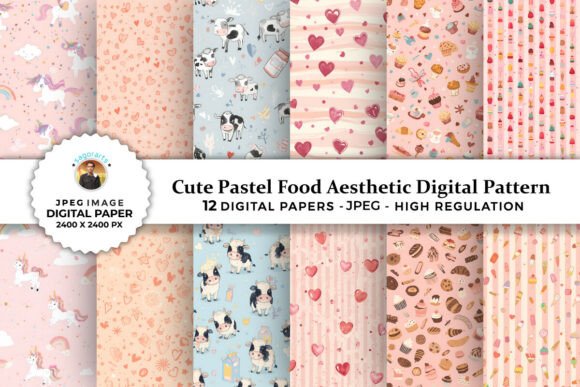
In the modern digital creative landscape, visual consistency is not merely an aesthetic choice; it is a functional component of brand identity and user engagement. For professionals ranging from small business owners to freelance designers, the ability to rapidly produce high-quality, cohesive visual assets is critical. This is where Pastel Food Aesthetic Digital Patterns enter the workflow. These are not just decorative images; they are versatile digital papers designed to streamline the production process for greeting cards, gift wrapping, tumbler wraps, scrapbooking, and social media backgrounds.
The appeal of this specific aesthetic lies in its psychological impact. Pastel colors evoke calmness, nostalgia, and approachability, while food motifs add a layer of relatability and warmth. When integrated into a broader design strategy, these patterns serve as foundational elements that reduce decision fatigue. Instead of creating textures from scratch, creators can leverage pre-designed, high-resolution assets to maintain a consistent visual language across multiple touchpoints.
Understanding the Asset: Specifications and Quality Control
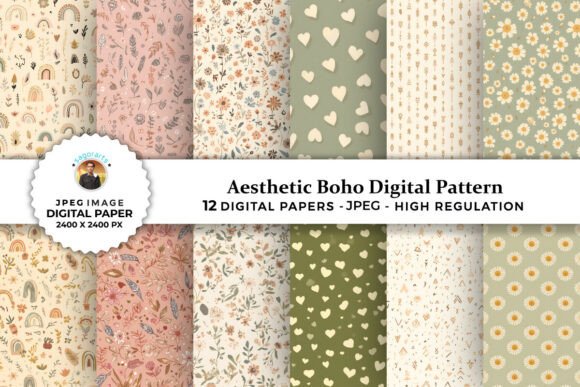
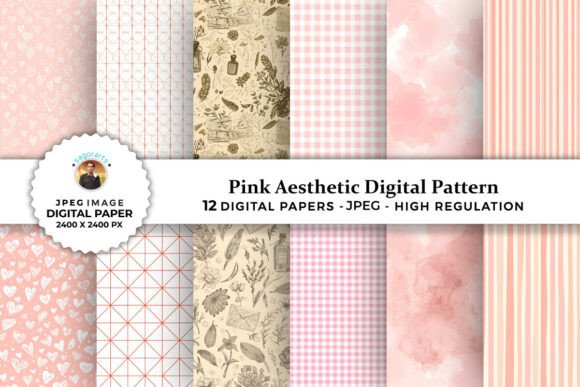
Before integrating any digital asset into a professional workflow, understanding its technical specifications is essential for ensuring quality control. The collection in question consists of 12 distinct digital papers contained within a single zip file. Each file is provided in JPEG format with dimensions of 2400 x 2400 pixels. While this resolution may seem modest compared to print-ready 300 DPI standards for large banners, it is highly optimized for web use, mobile viewing, and medium-scale printing projects such as invitations or card fronts.
The JPEG format ensures broad compatibility across various software platforms, from Adobe Photoshop and Illustrator to Canva and Microsoft PowerPoint. However, users must be aware that JPEG is a lossy compression format. For projects requiring transparency or complex layering, converting these files to PNG might be necessary, though this increases file size. The inclusion of 12 variations allows for significant flexibility in mixing and matching, enabling creators to build custom palettes without needing to source multiple disparate packs.
Integration into Creative Workflows
The true value of Pastel Food Aesthetic Digital Patterns emerges when they are treated as modular components of a larger design system. Rather than viewing them as standalone images, consider how they function as background layers, texture overlays, or thematic anchors in different stages of a project.
Pre-Production and Planning
In the planning phase, these patterns help establish mood boards and style guides. For educators or bloggers creating content about lifestyle, baking, or wellness, having a library of pastel food graphics accelerates the ideation process. By selecting three complementary patterns from the set, a creator can define a color palette early in the process. This reduces the time spent on iterative design adjustments later. For instance, a small business owner launching a new line of baked goods can use these patterns to visualize packaging concepts before committing to physical prototypes.
Execution and Design Implementation
During the execution phase, these digital papers serve as efficient building blocks. Here are several practical applications:
- Greeting Cards and Invitations: Use a solid pastel pattern as the base layer. Overlay text using a contrasting font color. The subtle food motifs provide visual interest without overwhelming the typography, which is crucial for readability in formal invitations.
- Tumbler Wraps and Vinyl Projects: For crafters who sell personalized tumblers, these patterns offer a quick way to generate unique designs. Because the files are square (2400x2400), they can be easily tiled or cropped to fit cylindrical surfaces. Ensure you check the aspect ratio required by your vinyl cutter software to avoid distortion.
- Digital Backgrounds: Content creators can use these patterns as backdrops for Zoom calls, YouTube thumbnails, or blog headers. The soft tones ensure that foreground elements, such as products or faces, remain the focal point.
- Scrapbooking and Journaling: Hobbyists can print these patterns at home or via a local print shop to create custom journal pages. The 12 variations allow for thematic organization, such as assigning specific food patterns to different months or topics in a bullet journal.
Post-Production and Distribution
After the design is complete, the ease of file management becomes apparent. Having all 12 files in one zip archive simplifies backup and retrieval. When delivering final assets to clients, whether as digital downloads or printed proofs, having a standardized set of high-quality backgrounds ensures professionalism. It also facilitates consistency if a client requests changes across multiple items, such as updating a series of social media posts.
Compatibility and Technical Considerations
While the JPEG format is widely compatible, there are nuances to consider for optimal results. If you are working in vector-based software like Adobe Illustrator, raster images like JPEGs can lose sharpness when scaled up significantly. Therefore, it is best practice to import these patterns at their native resolution or slightly smaller. If you need to scale them up for large format prints, consider using AI upscaling tools cautiously, keeping in mind that pixelation may occur in detailed food illustrations.
For those using online design platforms like Canva, these files upload seamlessly. Users can drag and drop the JPEGs onto their canvas, adjust opacity to create watermarks or subtle textures, and apply blend modes such as "Multiply" or "Overlay" to integrate them more naturally with other elements. This functionality is particularly useful for marketers who need to produce branded materials quickly without deep technical expertise.
Strategic Use Cases for Business and Education
Beyond individual crafting, these patterns have strategic applications in business and education. Marketers can use them to humanize a brand. A corporate entity looking to soften its image during community outreach campaigns might adopt pastel aesthetics to appear more approachable. Similarly, educators designing learning materials for younger students or subjects related to nutrition, health, or home economics can benefit from the engaging nature of food-themed visuals.
For freelancers and publishers, efficiency is key. Using pre-made digital papers reduces the billable hours spent on background creation, allowing more time for core content development or client communication. It also minimizes the risk of copyright issues associated with sourcing stock imagery from third-party libraries, provided the license for the digital paper pack permits commercial use.
Best Practices for Long-Term Use
To maximize the utility of Pastel Food Aesthetic Digital Patterns, adopt a systematic approach to organization. Create a dedicated folder structure on your hard drive or cloud storage, categorizing the files by theme or color tone. Label files clearly, e.g., "Pastel_Food_Pattern_01_Strawberry.jpg," to facilitate quick searching. Regularly review your usage to identify which patterns are most effective for your audience, allowing you to refine your visual strategy over time.
Furthermore, always verify the licensing terms before using these assets in commercial products. While many digital paper packs allow for resale of finished physical goods (like printed cards), restrictions often apply to reselling the digital files themselves. Understanding these boundaries protects your business and respects the intellectual property of the original designer.
Conclusion
Integrating Pastel Food Aesthetic Digital Patterns into your workflow is a practical decision that enhances both efficiency and aesthetic quality. By providing high-resolution, versatile, and visually appealing backgrounds, these assets support a wide range of creative and professional endeavors. Whether you are designing a wedding invitation, personalizing a tumbler, or developing a brand’s social media presence, these patterns offer a reliable foundation. Embrace them as tools for streamlining your creative process, allowing you to focus on the message and the experience you wish to convey to your audience.